Social Icons

Thursday, 22 December 2011

Beyond Petroleum? Hardly....

I find myself frankly unsurprised at BP’s recent announcement to close its solar arm. The company has found the market increasingly challenging against stiff competition but this move will be seen by many as confirmation of their paying lip-service to small scale renewables over the past few years.


Where once we might have hoped that they would use their vast revenues from carbon-heavy fuel to help fund development and research in to greener forms of energy generation paving the way for a smooth transition to cleaner power, we now face the reality of their 1750 solar workers being made redundant.

Yet again, big oil seems to be putting profits and shareholders ahead of the environment and carbon savings...very disappointing...

Thursday, 1 December 2011

Ampera - an EV for the masses?

Posted on December 1, 2011 at 4:10 PMDelete 
delete 
  Overlays edit   Comments comments (0)

I have spoken at length previously about the worrying level of sales of electric vehicles but there is perhaps a beacon of hope on the horizon...the Vauxhall Ampera. The Ampera is based on the North America-based Chevrolet Volt.


For one thing, at least it looks good, addressing one of my biggest concerns about the design of mainstream electric cars but it is the clever packaging of a number of technologies that will surely make this the most popular EV on our roads.
The Ampera has an electric motor, petrol engine and a battery pack that work together to provide up to 40 miles on pure electric power and then an additional 350 miles when the electric motor is boosted by the petrol engine. The 40 mile electric range is considered small when compared to the Nissan Leaf or the Renault Fluence but when you consider that 80% of journeys in Europe are 30 miles or less in distance it makes sense. Personally, my 40 mile round trip commute would be covered by the electric motor ensuring that the petrol engine was not needed and thereby ensuring no carbon emissions.
The petrol engine ensures that the vehicle has the range to make 'proper' journeys and the electric motor being employed fully throughout ensures that emission levels are much lower than other hybrids. Even when the petrol engine is used its emissions are 40g/km, trumping the Prius' 89g/km for example.
It is not cheap at £30,000 list price but the UK Government's £5,000 EV subsidy will help - meaning a proper, useful, family-friendly electric vehicle can be had for £25,000. This should ensure they sell thousands in congeston-charging London alone. The 100mph top speed should help too. Fingers crossed this is the EV to bring them in to the mainstream....

Wednesday, 30 November 2011

Google pulls plug...

Posted on November 30, 2011 at 3:55 PM


Google has sadly decided to pull the plug on its internal efforts to make renewable energy cheaper than coal, dubbed “RE<C”. The search engine giant is currently undergoing a massive rationalisation programme where it is closing a number of pet projects and alas this green endeavour is part of the latest cuts.


Google’s effort focused on the efficiency of heliostat-based solar technology where focused sunshine is used to heat water to generate steam that then drives a turbine to generate electricity.

However, there are two pieces of good news as Google has published its findings so far at www.google.org/rec and has announced that it will continue to invest in renewable technology, mirroring the company’s assessment that there are organisations that are better placed to take on the development of renewables than Google themselves.

Whilst the continued interest is great news, it is a shame that an organisation that has a massive engineering resource such as Google has elected to move away from direct involvement in this critical sphere.

Thursday, 10 November 2011

350mpg!

Posted on November 10, 2011 at 12:25 AMDelete 
delete 
  Overlays edit   Comments comments (0)

If you know your cars then you know who Gordon Murray is. He is now working on producing probably the greenest car in the world. His name is legendary in car design having been responsible for what many feel is the greatest car ever made - the McLaren F1. The F1 was capable of hitting 240mph, produced in very limited numbers and now sells for millions of pounds second-hand. Just don’t mention the carbon footprint...


Professor Murray has since turned his supreme design eye to the environmental end of the performance spectrum and his grand vision is the T.27, a small, electrically-powered, affordable and green urban car. The T.27 borrows from the F1 in several ways as it has a central driving position for the person behind the wheel and two passengers seats in the rear that flank the driver’s sides. It also has all its instrumentation mounted centrally, like a Formula 1 car. Its small scale would theoretically allow three T.27s to park in one regular UK parking space or two to use one lane of a UK motorway. Despite its small size it will still hit 60mph in under 15 seconds and has a top speed of 65mph.

However, its real eye-popping number is its fuel economy. The car recently swept the board at the annual Brighton to London RAC Future Car Challenge where a variety of green cars are pitted against each other in an effort to raise awareness of low carbon motoring.

The T.27 covered the 57.13 miles from Brighton to London carrying 2 occupants, inside the allocated time using less than 64 pence worth of energy – equivalent to a staggering 350 MPG (0.81 litres / 100 km) and only 37 gm CO2 / km. On a full charge, taking only 4 hours from a regular domestic power socket, the T.27 can do more than 100 miles.

These numbers are simply incredible and surely point towards it being a very popular seller when it does finally go in to production. The quicker the better in my opinion...

Friday, 28 October 2011

FIT in fits...part 2

Posted on October 28, 2011 at 11:45 AMDelete 
delete 
  Overlays edit   Comments comments (0)

It appears that a recently leaked document from the Energy Saving Trust has let the cat out of the bag on the Government's plans to cut the subsidy for solar photovoltaic installations.

The long rumoured cut seems set to be pegged at 21p/kWh, significantly down from the original 43.3p/kWh for retrofitted systems under 4KW in size, where the vast amount of installation activity has been undertaken or planned.

This major cut will have wide-reaching implications for the entire industry and will require a number of projects to revisit their financial models to ensure things still stack up. Whilst on the one hand the argument that the subsidy needs to be cut because of the significant increase in installations and reduction in system costs can only be good news, doubts remain as to whether this is too much, too soon for a still growing and maturing industry. It also impacts on the Government's plans to see green energy at the forefront of our economic recovery.

If this is indeed the level the subsidy will be set at it will have an impact - and it remains to be seen whether it's as bad as feared. Personally, a cut bigger than 50% may be too hard for the industry to take.

FIT in fits...

Posted on October 28, 2011 at 11:45 AMDelete 
delete 
  Overlays edit   Comments comments (0)

The renewables industry in the UK is currently seeing a stampede for installations of energy systems eligible for Feed In Tariff payments.

The Tariff or FIT supports renewable systems by providing a payment per kilowatt of ‘green’ electricity generated. For example, after a recent Government review, the subsidy for a solar photovoltaic system that is retrofitted to a house is 43.3p/kWh. This is coupled with an award for the export of electricity back to the grid as well. This applies to the life of the system and can generate considerable income to the system owner.

The full Feed In Tariff Support list is as follows:
Anaerobic digestion ≤250kW 14.0 20
Anaerobic digestion >250kW - 500kW 13.0 20
Anaerobic digestion >500kW 9.4 20
Hydro ≤15 kW 20.9 20
Hydro >15 - 100kW 18.7 20
Hydro >100kW - 2MW 11.5 20
Hydro >2MW - 5MW 4.7 20
Micro-CHP [B] <2 kW 10.5 10
Solar PV ≤4 kW new [C] 37.8 25
Solar PV ≤4 kW retrofit[C] 43.3 25
Solar PV >4-10kW 37.8 25
Solar PV >10 - 50kW 32.9 25
Solar PV >50 - 150kW 19.0 25
Solar PV >150 - 250kW 15.0 25
Solar PV >250kW - 5MW 8.5 25
Solar PV Standalone [C] 8.5 25
Wind ≤1.5kW 36.2 20
Wind >1.5 - 15kW 28.0 20
Wind >15 - 100kW 25.3 20
Wind >100 - 500kW 19.7 20
Wind >500kW - 1.5MW 9.9 20
Wind >1.5MW - 5MW 4.7 20
Existing generators transferred from RO 9.4 to 2027

Notes:
[A]: These tariffs are index-linked for inflation (see below).
[B]: This tariff is available only for 30,000 micro-CHP installations, subject to a review when 12,000 units have been installed.
[C]: These terms are defined as follows:
“Retrofit” means installed on a building which is already occupied
“New Build” means where installed on a new building before first occupation
“Stand-alone” means not attached to a building and not wired to provide electricity to an occupied building

Once a system has been registered, the tariff levels are guaranteed for the period of the tariff and index-linked. For systems registered in future years, some tariff levels will be adjusted to account for expected reductions in system prices. For householders producing energy mainly for their own use, the tariff income is also free from income tax.

What I do find curious and disappointing is the focus on the income generation element of the FITs. The Feed In Tariff is not intended to be an income-generating scheme, it is intended to help drive down the cost of renewable energy systems to help make them competitive with traditional fossil-fuel based systems. This is why the scheme sees the contribution be higher for earlier adopters (i.e. now) as compared to later in the scheme’s currently planned lifespan.

By getting more, immediate installations, the cost of the equipment, installation and utilisation will fall through natural supply and demand and the channels of creation, supply and delivery will be developed more rapidly. The carbon argument also gets overlooked with very few recognising the significant savings that will result from the replacement of the fossil-fuel based systems with renewable ones.

Sadly in these challenging of economic times the FIT is seen as a potential revenue stream rather than a driver for change. However, if the economic factor helps achieve its aims indirectly then this at least will see it succeed, it is just concerning that so many see the FIT for its cash potential rather than change potential. 

Thursday, 27 October 2011

Electric vehicles...low voltage demand?

Posted on October 27, 2011 at 4:05 PMDelete 
delete 
  Overlays edit   Comments comments (0)

It can hardly be a surprise that a recent assessment of the level of sales of electric cars has shown disappointing results. Only 106 electric cars were sold in the second quarter of 2011 and the total number of electric vehicles in the UK is now just 1107, an insignificant percentage of the 28.5 million cars on our roads.

Despite the £5,000 Government subsidy towards the cost, the high price tag for what often are very boring vehicles to look at is hardly going to inspire a buyer, especially in these times of high unemployment, few job prospects, diminishing income levels and higher costs in other areas such as utility bills, food etc...

The Government had hoped that 2011 would be the year that EVs took off but this hardly looks likely with a gloomy economic forecast. I also think the design of the few models available in the UK leave a lot to be desired. Whilst the Nissan Leaf is a technical marvel, it looks remarkably like a Nissan Micra and few people would be willing to pay £28,990 for a Micra no matter how awesome the technology beneath the bonnet is. I will quickly add that I am huge fan of Nissan’s cars, especially the less-than-green GTR but can’t bring myself to love the Leaf.
Surely there is a gap in the market for an electric vehicle that is practical, good looking and affordable? An electric Mini or Fiat 500 might fit the bill. Indeed, the Mini E - an electric variant - has been showcased but is yet to come to market whilst the e500 requires a custom conversion and is made to order.

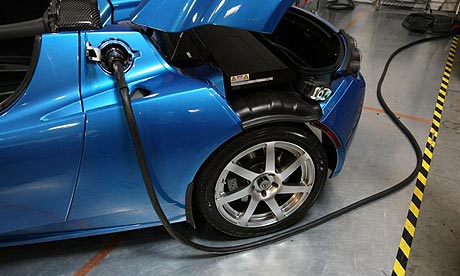
It is curious that the hybrid fuel/electric cars like the Prius and CR-Z continue to sell better than pure electric vehicles. Hopefully when cars like the Vauxhall Ampera (the UK edition of the Chevrolet Volt) and even the top-end Fisker Karma and Tesla vehicles are available they will help spark some interest...pun intended...

Thursday, 22 September 2011

Ecotricity...leading from the front as usual...

Posted on September 22, 2011 at 3:45 PMDelete 
delete 
  Overlays edit   Comments comments (0)

Good to see Ecotricity leading from the front yet again by rolling out their own electric vehicle charging network across the UK. Sadly, the biggest sticking point for new fuelling options such as electricity and hydrogen is, and will be for a while, the infrastructure issue but at least someone is doing something about it.

Tuesday, 2 August 2011

Feeding Frenzy...

Posted on August 2, 2011 at 11:15 AMDelete 
delete 
  Overlays edit   Comments comments (0)

The Feed-in-Tariff is the UK’s subsidy system designed to help drive the uptake of smaller-scale renewable energy technology across the country. The approach has been taken from elsewhere in the world where it has been successfully implemented.


The tariff provides revenue based on a price per kilowatt hour generated and an additional subsidy for unused electricity exported back to the national grid is paid as well. The tariff operates on a time-limited sliding scale where it will reduce in contribution down to a set target level by a certain date in the future. The intention being to see the higher subsidies on offer earlier in the scheme help drive system installations, thereby increasing demand in the marketplace and reduced overall system and installation costs and see a communal benefit result.

The ultimate aim of FITs is to see the cost of renewable energy systems come down to such a point where they compete with traditional energy systems such as those based on fossil fuel. There has been a recent flurry of activity to get installations completed ahead of the first drop in subsidy but despite the honourable intentions of the scheme the ultimate aim of the subsidy is often overlooked with many choosing to focus on the financial implications (especially the pure revenue yields) rather than the long-term aim. This selfish short-termism is quite worrying…

The UK Government recently chose to alter the scheme to ensure greater parity for all, enabling more people to benefit and this left some larger scale solar farm developers looking at much smaller contributions. Despite some outcry surely it is right that the FIT subsidy is spread equitably across the entire country and across a variety of technologies rather than just solar in one particular area? Only by taking a holistic approach can we ensure that the impact of climate change and energy security can be minimised.

Friday, 22 July 2011

Hail to The Redskins!

Posted on July 22, 2011 at 3:24 PMDelete 
delete 
  Overlays edit   Comments comments (0)

Despite being a longtime fan of the New York Giants I have to credit the Washington Redskins for their efforts to bring solar power to the masses. The ‘Skins recently announced an agreement to build a 2 megawatt array in the parking lot of their home stadium, FedEx Field. The array will consist of 8,000 panels and serve a number of purposes....


Besides generating enough power to run the stadium on non-gamedays as well as contribute significantly to the stadium’s energy use for home games, the array will also provide shelter during inclement weather - common in the winter months and no doubt popular with the tailgaters. It will also help reduce car wear and tear and fuel use by keeping the vehicles cooler ensuring less sun damage and need for air conditioning. Excess power will also be sold to the grid generating income from an otherwise fallow piece of land.

The array will be installed by NRG, a US energy firm who will also install charging stations for 10 electric cars and build a dedicated plaza showcasing differing solar panel technologies at one of the stadium’s entry gates that will be seen by thousands of fans each season.

This is a bold move by the Redskins and a highly commendable one - no doubt many more arenas across the world will do likewise in the coming years.

Tuesday, 21 June 2011

Solar for All...

Posted on June 21, 2011 at 10:08 AMDelete 
delete 
  Overlays edit   Comments comments (0)

The offering of a free or reduced cost electricity-generating solar panel or ‘PV for Free’ as it is often dubbed is not a new development here in the UK. A number of organisations have announced their intention to go to market with such an offering including many of the ‘Big 6’ power companies.


Indeed, Scottish and Southern Energy recently offered such an approach to their customers but selection was predicated on the size of roof space available. It was however free for customers (if they chose this approach) and they would receive free electricity when available from the panel but no direct financial return. The revenue element would be retained by SSE and help offset the cost of the installation and SSE would also retain the lifetime carbon savings. It is, however, clearly a win-win for both sides and helps with a) the rollout of lower carbon energy generation and b) reducing the cost of panels overall by increasing sales.
 
 However, it appears that the mighty Google is yet again looking to be a major player in this field, especially in the USA. They have invested $280 million in SolarCity, a company that offers a similar approach to US homeowners where they can choose a panel lease approach. This will see the homeowner pay for their panel out of the $100 per month savings made from their utility bill and over the lifetime of the panel they would save $16,000. A clever approach and one that echoes the looming Green Deal ethos coming to the UK.

Tuesday, 14 June 2011

A UK-wide broadband network...for £31million?!

Posted on June 14, 2011 at 1:50 PMDelete 
delete 
  Overlays edit   Comments comments (0)

A highly promising unveiling from a Cambridge start-up called NeulNet has gotten the network industry buzzing. Neil is looking to utilise the white spaces between the tv broadcast network for the provision of wireless broadband. White spaces, unlike the mobile phone spaces, is unregulated and therefore free of any Government licensing requirements. It is however still illegal to use them but a number of interested parties are looking to utilise the spare capacity.


Google have looked in to it in the USA but this is the first bona fide effort I know of in the UK. Neul claim that 99% of the UK could be covered with a network capable of speeds up to 15mb down for £31million – about 40% of the cost of one Eurofighter jet. A similar mobile network would cost £500 million. It also consumes less power than a mobile network.

If this technology can be proven realistic and capable in a real-world deployment then this is surely something that needs public agency support and is a worthy investment in bringing better connectivity and network provision to more of the country for less cost. The potential benefits would be incredible.

Tuesday, 7 June 2011

Set to Bloom...

Posted on June 7, 2011 at 3:11 PMDelete 
delete 
  Overlays edit   Comments comments (0)

Bloom Energy is a company I have been following for quite a while now...

They produce a pretty remarkable technology called an Energy Server, which is a fuel-cell based electricity generator that can use virtually any fuel source to generate electricity for a home or business. It decentralises the generation process, moving the demand away from the big dirty power stations. Beyond the obvious capital and fuel costs, the energy is free. The most common fuel source used is natural gas.


The cells convert hydrogen and oxygen in to electricity via solid oxide cells and an electrochemical process. The secret sauce is in the cheap materials used and the conducting paint on the cells. Bloom believes that the Servers will have a big impact by providing power in off-grid areas as well as eliminating demand from the big power plants. The servers cost $700,000 each but many big companies such as Google, eBay, Walmart and Coca-Cola have already bought one.

Many believe this technology could take off if the capital cost comes down sufficiently and the decentralised approach will help minimise the sizeable impact of transmission losses. Bloom Energy is even working on a domestic scale system. I would love my own power plant in my home!

CSE report gives strong backing to wind turbines

Posted on June 7, 2011 at 12:19 PMDelete 
delete 
  Overlays edit   Comments comments (0)

The recently released ‘Common concerns about wind power’ report written by the Centre for Sustainable Energy makes for fascinating reading and explodes a number of myths and concerns often touted by those against turbine developments.


I am a wind turbine proponent, but only as part of a mix of energy generation options and energy reduction measures, and they cannot be relied on alone to provide all of our clean power needs in future. However, I do think they are critical to our low carbon future. But they do need to be located in areas where they make sense, in terms of the environmental, visual and generation impact. I also strongly believe they need to provide a clear and direct benefit to the communities located closest to them, an approach I favour in my professional life.

As part of my job I often engage directly with communities concerned about turbine developments. Often it is those most upset at the whole concept that I hear from the most, the so-called ‘vocal minority’, as they are the ones most likely to come out to a meeting or event to voice their displeasure. A great many concerns I hear include fears about the impact on house prices, visual change, noise, flickering light, ice and other broad safety concerns. Any concern an individual has is a valid one but the reality has to be based on fact.

The recently published report from the Centre for Sustainable Energy shines a light on this reality and it makes for interesting reading…

It clearly outlines and negates the often over-egged headline impacts seen in media coverage and often flat wrong suppositions put forward in respect of likely turbine impact on house prices, infrasound, net energy costs and the environment. It also underpins the assertion that they do have a role to play as part of a broad energy generation mix.

Key findings include:

- The statement that turbine farms payback their embedded energy in less than 6 months, torpedoing one of the common arguments against them.
- Onshore wind costs approximately 3.2p per kWh to generate which compares favourably to the grid-wide wholesale price average of 3.0p per kWh.
- Clarification of the difference between load factor and efficiency – they are not the same. Onshore wind averages 27% load capacity whilst conventional thermal power stations average 38%. As the technology improves, the efficiency of turbines will only go in one direction, narrowing this gap.
- Indication that we need onshore wind turbines to help meet our energy and carbon targets and it is still cheaper to build a turbine on land than offshore.
- The statement that the UK’s free market nuclear sector does not allow for the necessary level of control as evidenced by France’s successful state-owned programme.
- The fact that heavy community involvement in any turbine development is a must. A sentiment I would echo greatly.
- That there is no evidence of turbines impacting on local house prices.
- Evidence that wind energy is one of the safest forms of generation.
- Shadow flicker and noise has minimal impact and can be mitigated.
- That noise can be a factor (dependant upon location) but improved design has helped mitigate any impact
- Many, many more birds and bats are killed by traditional energy generation systems, buildings and power lines than wind turbines even when figures are averaged out.

This detailed report is a powerful statement that many of the concerns held against wind turbine developments are unfounded and I would urge anyone on either side of the debate to read it. You can download it here

Wednesday, 25 May 2011

Green dream machine

Posted on May 25, 2011 at 11:03 AMDelete 
delete 
  Overlays edit   Comments comments (0)

In a move that will come as a surprise to no one, Honda have announced they will be producing a Mugen variant of their beautiful CR-Z hybrid sportscar.


According to company information, the car will have performance equal to that of the Civic Type R thanks to a supercharger upgrade on the petrol engine component giving it almost 200bhp. Other upgrades involve the bodywork and alloys.
Either way, the official unveiling at the Goodwood Festival of Speed should be interesting for greenies and Honda fans alike...and it still does 50mpg in 'eco' mode!