Social Icons

Friday, 28 October 2011

FIT in fits...part 2

Posted on October 28, 2011 at 11:45 AMDelete 
delete 
  Overlays edit   Comments comments (0)

It appears that a recently leaked document from the Energy Saving Trust has let the cat out of the bag on the Government's plans to cut the subsidy for solar photovoltaic installations.

The long rumoured cut seems set to be pegged at 21p/kWh, significantly down from the original 43.3p/kWh for retrofitted systems under 4KW in size, where the vast amount of installation activity has been undertaken or planned.

This major cut will have wide-reaching implications for the entire industry and will require a number of projects to revisit their financial models to ensure things still stack up. Whilst on the one hand the argument that the subsidy needs to be cut because of the significant increase in installations and reduction in system costs can only be good news, doubts remain as to whether this is too much, too soon for a still growing and maturing industry. It also impacts on the Government's plans to see green energy at the forefront of our economic recovery.

If this is indeed the level the subsidy will be set at it will have an impact - and it remains to be seen whether it's as bad as feared. Personally, a cut bigger than 50% may be too hard for the industry to take.

FIT in fits...

Posted on October 28, 2011 at 11:45 AMDelete 
delete 
  Overlays edit   Comments comments (0)

The renewables industry in the UK is currently seeing a stampede for installations of energy systems eligible for Feed In Tariff payments.

The Tariff or FIT supports renewable systems by providing a payment per kilowatt of ‘green’ electricity generated. For example, after a recent Government review, the subsidy for a solar photovoltaic system that is retrofitted to a house is 43.3p/kWh. This is coupled with an award for the export of electricity back to the grid as well. This applies to the life of the system and can generate considerable income to the system owner.

The full Feed In Tariff Support list is as follows:
Anaerobic digestion ≤250kW 14.0 20
Anaerobic digestion >250kW - 500kW 13.0 20
Anaerobic digestion >500kW 9.4 20
Hydro ≤15 kW 20.9 20
Hydro >15 - 100kW 18.7 20
Hydro >100kW - 2MW 11.5 20
Hydro >2MW - 5MW 4.7 20
Micro-CHP [B] <2 kW 10.5 10
Solar PV ≤4 kW new [C] 37.8 25
Solar PV ≤4 kW retrofit[C] 43.3 25
Solar PV >4-10kW 37.8 25
Solar PV >10 - 50kW 32.9 25
Solar PV >50 - 150kW 19.0 25
Solar PV >150 - 250kW 15.0 25
Solar PV >250kW - 5MW 8.5 25
Solar PV Standalone [C] 8.5 25
Wind ≤1.5kW 36.2 20
Wind >1.5 - 15kW 28.0 20
Wind >15 - 100kW 25.3 20
Wind >100 - 500kW 19.7 20
Wind >500kW - 1.5MW 9.9 20
Wind >1.5MW - 5MW 4.7 20
Existing generators transferred from RO 9.4 to 2027

Notes:
[A]: These tariffs are index-linked for inflation (see below).
[B]: This tariff is available only for 30,000 micro-CHP installations, subject to a review when 12,000 units have been installed.
[C]: These terms are defined as follows:
“Retrofit” means installed on a building which is already occupied
“New Build” means where installed on a new building before first occupation
“Stand-alone” means not attached to a building and not wired to provide electricity to an occupied building

Once a system has been registered, the tariff levels are guaranteed for the period of the tariff and index-linked. For systems registered in future years, some tariff levels will be adjusted to account for expected reductions in system prices. For householders producing energy mainly for their own use, the tariff income is also free from income tax.

What I do find curious and disappointing is the focus on the income generation element of the FITs. The Feed In Tariff is not intended to be an income-generating scheme, it is intended to help drive down the cost of renewable energy systems to help make them competitive with traditional fossil-fuel based systems. This is why the scheme sees the contribution be higher for earlier adopters (i.e. now) as compared to later in the scheme’s currently planned lifespan.

By getting more, immediate installations, the cost of the equipment, installation and utilisation will fall through natural supply and demand and the channels of creation, supply and delivery will be developed more rapidly. The carbon argument also gets overlooked with very few recognising the significant savings that will result from the replacement of the fossil-fuel based systems with renewable ones.

Sadly in these challenging of economic times the FIT is seen as a potential revenue stream rather than a driver for change. However, if the economic factor helps achieve its aims indirectly then this at least will see it succeed, it is just concerning that so many see the FIT for its cash potential rather than change potential. 

Thursday, 27 October 2011

Electric vehicles...low voltage demand?

Posted on October 27, 2011 at 4:05 PMDelete 
delete 
  Overlays edit   Comments comments (0)

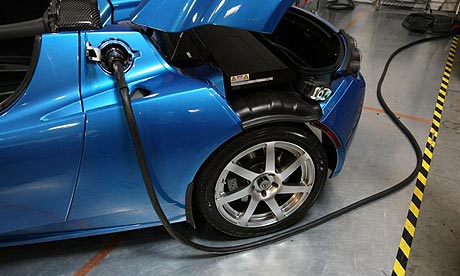
It can hardly be a surprise that a recent assessment of the level of sales of electric cars has shown disappointing results. Only 106 electric cars were sold in the second quarter of 2011 and the total number of electric vehicles in the UK is now just 1107, an insignificant percentage of the 28.5 million cars on our roads.

Despite the £5,000 Government subsidy towards the cost, the high price tag for what often are very boring vehicles to look at is hardly going to inspire a buyer, especially in these times of high unemployment, few job prospects, diminishing income levels and higher costs in other areas such as utility bills, food etc...

The Government had hoped that 2011 would be the year that EVs took off but this hardly looks likely with a gloomy economic forecast. I also think the design of the few models available in the UK leave a lot to be desired. Whilst the Nissan Leaf is a technical marvel, it looks remarkably like a Nissan Micra and few people would be willing to pay £28,990 for a Micra no matter how awesome the technology beneath the bonnet is. I will quickly add that I am huge fan of Nissan’s cars, especially the less-than-green GTR but can’t bring myself to love the Leaf.
Surely there is a gap in the market for an electric vehicle that is practical, good looking and affordable? An electric Mini or Fiat 500 might fit the bill. Indeed, the Mini E - an electric variant - has been showcased but is yet to come to market whilst the e500 requires a custom conversion and is made to order.

It is curious that the hybrid fuel/electric cars like the Prius and CR-Z continue to sell better than pure electric vehicles. Hopefully when cars like the Vauxhall Ampera (the UK edition of the Chevrolet Volt) and even the top-end Fisker Karma and Tesla vehicles are available they will help spark some interest...pun intended...