


Wednesday, 2 October 2013
Plug-in portable solar power - a gamechanger?
This is a terrific invention - really hope they can commercialise it. I can see a load of uses for this device technology.

Saturday, 14 September 2013
Supporting bees is always a winner...
I have a strong interest in someday having my own bee hives and this terrific movie from Bloomberg highlights the work being done at Seattle airport to help boost local bee populations. It is terrific and really encouraging to see a business linked with massive emission levels doing its bit for the planet....
Tuesday, 6 August 2013
For the love of Smart...
Smart Cars in their various guises often polarise opinions. Many people look on them with a smirk and believe they are not real cars, more like toys than true automobiles. Others love their petite shape, multitude of colours and options for personalisation. They appeal to the eco-conscious as well thanks to their fabulous fuel efficiency, low carbon emissions and low road tax but also horrify petrolheads who bemoan the expected lack of oomph from something so small, their tiny ‘toy car’ dimensions and dinky looks illustrating a nightmare drive. Either way, they do make a statement.

For me, I think they are as close to the perfect vehicle as you can get and I will explain why...
Design
Design comes down to personal taste and Smart are loved or hated in equal measure. Whilst clearly no Veyron or Atom in the design stakes, their cars do a fabulous job of making the most of what they have. Created for the urban environment, the popular ForTwo and its numerous formats is the most common variant but the now out of production Roadster is also a regular sight. There was also the ForFour but that model is now out of production like the Roadster but not as common a sight on the UK roads and not as eye-catching as the two-seater models in my opinion.

Personally I like the ForTwo’s style, it’s quirky yes but highly practical for nipping about city streets. Deluxe models allow for removable roof panels and convertible options to create a summertime open top and the limited edition Crossfire is striking in anyone’s eyes - but maybe not so practical for the Scottish climate! Despite there being only 2000 ever made, I did spy one on holiday in Greece....the perfect car for warmer climes and one that easily turns heads. The Brabus tuned models offer more power for the discerning driver.
Environmental Factors
The Smart cars are some of the lowest emitting vehicles on the road, some even attract zero road tax in the UK thanks to their emissions being below the various carbon thresholds. According to NextGreenCar.com, the average co2 emissions of the three Smart variants is as follows:
ForTwo (petrol) - 113g/km
ForTwo (diesel) - 88g/km
Roadster - 116g/km
These figures place them all amongst the lowest emitting cars available at present and the upcoming all-electric variant will only strengthen their appeal to both the green-centric driver and the financially frugal one.
Ease of Maintenance and Repair
There is a thriving underworld of Smart Car spares and personalisation parts on the internet for the enthusiast owner to either exact swift repairs to their vehicle themselves or to put their own spin on its look. I love this as I have always thought there was an opportunity for someone to design aftermarket modification in from the start. I always thought it would enhance a car’s appeal if the owner was able to make relatively-straightforward mods to their car to personalise it’s appearance or exact repairs in a classy way, not in the usual gaudy Subaru way (no boy racer growling exhausts or jumbo jet spoilers please!).
Anyone who owns a car knows that it is often small superficial damage to body panels such as bumps and scrapes that annoy the most and yet cost the most to repair relative to their size (e.g. a small scrape leads to a full respray costing hundreds.). The fact with a Smart that you can source spares from sites such as this and get simple real-world how-to guidance on the installation process from sites like this brilliant website show that there is a) demand for such customisation options among cars owners, b) a strong love for Smarts from their owners driving demand for this marketplace and c) a relatively straightforward process to complete any upgrades or repairs. Very ingenious and could only have been improved if Smart themselves had a prominent ‘spares and how-to shop’ online where you could source the parts and information you needed directly.
Fuel Economy
Fuel economy on the cars is also incredible - look at these manufacturer quoted numbers:
Smart ForTwo (petrol) - 64mpg
Smart ForTwo (diesel) - 86mpg
Smart Roadster - 58mpg
The diesel mpg numbers are insane and only rivalled by a handful of other cars such as the diesel Mini or Bluemotion Volkswagens for endurance.
Electric Edition
With the recent release of the electric drive version of the car, the Smart’s green credentials have been strengthened further. Coming in at a relatively paltry £12,275 (after plug-in subsidy for purchasing a green car but before battery rental), the EV Smart is significantly cheaper than competitors such as the Nissan Leaf, Mitsubishi i-MiEV or Citroen C-Zero. It is still relatively nippy and an advertised 90 mile range is excellent news for those looking beyond the daily commute. However, given the cost of battery leasing over and above the capital cost of buying the car and installing a charging station at home, it is likely that the petrol and diesel editions represent better financial value than the EV edition, albeit sacrificing higher emissions as a result. however at least the option is there for those wanting to adopt true zero emission transport...but it will cost you.
Economics
The economics of a Smart car also make incredible reading. Say you commute an average of 10500 miles per annum, look at the savings a Smart would deliver compared to an average family hatchback based on petrol and road tax costs per annum:
Total Running Cost Per Annum
|
Annual Running £
|
Difference p.a. in £
|
Average Family Hatchback
|
£1,735.56
|
-
|
Smart ForTwo
|
£980.40
|
£755.16
|
Smart Roadster
|
£1,086.00
|
£649.56
|
Smart ForTwo Diesel
|
£739.20
|
£996.36
|
Smart ED
|
£359.04
|
£1,376.52
|
Conclusion
It only takes a day or two in London to see how popular the Smart is there because of the congestion charge but even outwith the capital a Smart is in my opinion the ideal roadcar. Have a look at the other cars on the road the next time you commute to work and see how many only have one driver on board - we need to get away from the ‘bigger is better’ mantra for cars - most of us only need something that can carry two people and what better, more economical and greener a way to travel is there on the road than in a Smart....in my opinion at least!
Thursday, 13 June 2013
Greek Tragedy...
The recent announcement that Greece’s market has been reclassified as an ‘emerging’ one rather than a ‘developed’ is seen as another blow to the country’s fortunes at a time when it appeared that the green shoots of recovery had finally started to emerge. Investor confidence had finally started to increase but this will likely be rocked once again by this news.

The sudden closure of the national state broadcaster ERT to supposedly save money will also be seen as a massive blow by many who will smell conspiracy when in reality it may well have been justifiable cost reasons. However, there will be few outwith the far right parties who would see the loss of the state broadcaster as being appropriate to be at the top of the list of cuts, regardless of cost.
Hopefully the mooted re-launch of a leaner media entity will happen sooner rather than later but this move might very well be a PR nightmare the Government should have foreseen better.
Friday, 17 May 2013
Focus on fuel but don't forget the carbon...
Focusing on the data brings home the real issues and areas for concerns however...
The chart below, culled from data from DECC, illustrates the pricing trend for diesel and petrol at the pump in the UK (before duty is added) for the last 10 years.

It’s pretty clear which direction it has been going since 2003 and every road user in the UK would likely agree. What is most disappointing is how this compares to the value of carbon as illustrated below, taken from the ICE EUA futures pricing up to December 2012. The primary tool to combat climate change left valueless and facing major crisis after crisis.

Yet providing a backdrop to this whole sorry affair are the latest atmospheric carbon findings from UC San Diego via their clear and powerful Keeling Curve project....
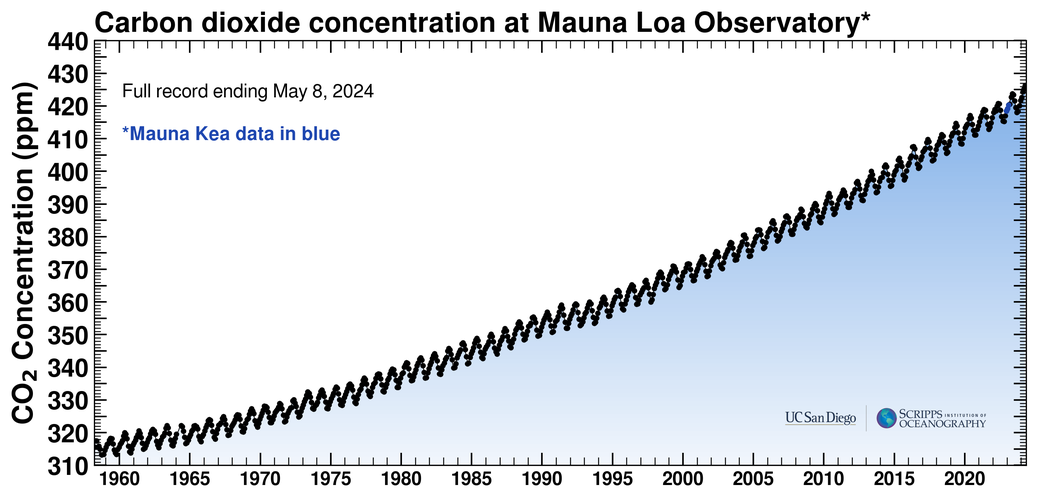
Lost amongst all of this gnashing of teeth and worry about insider trading and grubby profiteering is the fact that global carbon emissions continue to go in one direction and these numbers should be the only ones we are concerned about.
Wednesday, 17 April 2013
Carbon Crisis
Europe’s carbon market faced a critical hurdle this week as the European Union battled to prop up the currently saturated carbon trading scheme. A vote on the 16th of April looking to backstop the planned removal of carbon credits was seen to be critical.
The European Commission was looking to temporarily remove some of the carbon allowances to provide a swift resolution to the problem and hopefully bring the carbon price up from its recent record lows of €3.00 per tonne. Political wrangling meant that the biggest party bloc - the European People’s Party was against the move but over half of the member countries backed the move. However, bigger hitters such as Poland and Germany were yet to commit to the plan as they feared a higher ETS would drive up business costs.
And so the outcome of the vote was to reject the move (just), causing many to believe that this major plank of the European Union’s assault on climate change is now dead in the water. The outcome caused the carbon price to plummet yet again as traders were left reeling by the verdict. Those in favour of the scheme believe it can still be saved however but it will take a massive effort and some major political wrangling.

Whatever happens, the carbon price graph (above) makes for horrid reading and indicates that this key weapon in the drive towards a lower carbon future is being blunted from various directions and leaves many, including me, wondering just what can be done to force/encourage big business to really focus on climate change.
Saturday, 30 March 2013
Bitcoin...no longer a bit player...
Whilst the developments in Cyprus are both equally appalling and frightening - especially when you consider it may well be seen as a test bed for intervention measures by the 'Troika' made up of the European Union, the IMF and the European Central Bank - it does make for fascinating reading.
 Of particular interest is the recent reports that many Cypriot residents are turning to the virtual currency BitCoin as a safe harbour for their money at a time when massive restrictions on the movement of money and savings have been put in place. Withdrawals have been limited to several hundred Euros per day and movement of capital out of the country has been curtailed and recent reports suggest those with savings in excess of Eu100,000 stand to lose up to 60% of their hard-earned nest eggs.
BitCoin, seen by many as little more than a financial sideshow (a $964million market compared to the $4trillion traded each day in hard cash) and one that is vulnerable to hacking or dilution. It is also completely unregulated yet many are turning to it in response to restrictions (such as those in Cyprus) and in countries that anticipate a similar impact in the coming months (Greece, Spain etc.). As a result, the value of BitCoin as rocketed (see graph) and increased the media exposure of this peer-to-peer system that eliminates the 'bank' as the intermediary in the transfer or storage of money.
 In our connected world, this can only be a good thing as it will surely help establish BitCoin as a legitimate player in the financial world and ensure that what can often seem to be archaic financial systems begin to move at internet speed and in a more sustainable way...

BitCoin, seen by many as little more than a financial sideshow (a $964million market compared to the $4trillion traded each day in hard cash) and one that is vulnerable to hacking or dilution. It is also completely unregulated yet many are turning to it in response to restrictions (such as those in Cyprus) and in countries that anticipate a similar impact in the coming months (Greece, Spain etc.). As a result, the value of BitCoin as rocketed (see graph) and increased the media exposure of this peer-to-peer system that eliminates the 'bank' as the intermediary in the transfer or storage of money.

Sunday, 17 March 2013
Cyprus crisis...EU out of options?
The surprise and shocking announcement at the weekend of the Cypriot Government’s decision to apply two layers of one-off tax to savers’ funds has many layers of meaning. The tax decision will see savers with under €100,000 hit with a 6.75% levy whilst those with over €100,000 will face a 9.9% charge. Unsurprisingly there has now been a run on the banks whilst savers (forlornly) try to get their own cash out before the surcharge was applied. The levy was made necessary as the European Union and International Monetary Fund stepped in to bail out the national economy but only if the balance of the needed money was found elsewhere.
 It seems the real impetus for this move came from Europe with fingers being pointed towards Berlin. The Cyprus government is a coalition and could never have hoped to carry this directly and the reason for the needed bailout is decreasing governmental finances and high levels of bank debt from recent property booms and links to the Greek crisis from lending. The banks are tapped out and the only organisation that could help recapitalise them, the Cyprus government, is too. The result? EU bailout...
Most worrying however, when looking at the bigger European picture, is that this move smacks of desperation with many commentators fearing this shows the EU is out of ideas on how best to avoid a bigger financial meltdown that would incorporate more countries and I do think they are right.
The EU brass have probably booted the idea of a ‘savers’ tax’ around many shadowy boardrooms but then had to cast it aside knowing that it would never work unless it could be tried first in a small test case to see what happens. Cyprus may well be a victim of their size - they would never try this in Spain or Portugal but a small island nation on the geographical edge of the Euro zone is ideal. The country also apparently has a number of wealthy foreign ‘investors’ whose income came from less than clear sources - an ideal faceless demographic to hit with a big surcharge.
The scary thing is if the bailout fails then many believe this could be the spark to cause a much bigger EU collapse - the nuclear refinancing option seen to publicly fail - and savers' security and confidence in tatters. But if it succeeds, many governments may well bring this move to the front page of their playbook for avoiding new recessions. And what would stop them coming back to the well in future? What will savers in countries outside Cyprus think? Probably ‘where is my money safest?’ and the answer might well be ‘fewer places than before’...

Most worrying however, when looking at the bigger European picture, is that this move smacks of desperation with many commentators fearing this shows the EU is out of ideas on how best to avoid a bigger financial meltdown that would incorporate more countries and I do think they are right.
The EU brass have probably booted the idea of a ‘savers’ tax’ around many shadowy boardrooms but then had to cast it aside knowing that it would never work unless it could be tried first in a small test case to see what happens. Cyprus may well be a victim of their size - they would never try this in Spain or Portugal but a small island nation on the geographical edge of the Euro zone is ideal. The country also apparently has a number of wealthy foreign ‘investors’ whose income came from less than clear sources - an ideal faceless demographic to hit with a big surcharge.
The scary thing is if the bailout fails then many believe this could be the spark to cause a much bigger EU collapse - the nuclear refinancing option seen to publicly fail - and savers' security and confidence in tatters. But if it succeeds, many governments may well bring this move to the front page of their playbook for avoiding new recessions. And what would stop them coming back to the well in future? What will savers in countries outside Cyprus think? Probably ‘where is my money safest?’ and the answer might well be ‘fewer places than before’...
Friday, 1 February 2013
Moving the Green Goalposts...

TfL now have a public consultation underway where they intimate their plans to lower the exemption level to 75 g co2 km. This would mean that only fully electric cars would be eligible to avoid paying the congestion charge. Whilst this may seem sensible to help a) further drive vehicle emission reductions and b) reduce congestion - it may have the opposite effect...
Firstly, this move would undoubtedly and rightly anger the many motorists who chose to invest in a low emitting vehicle either for green or economic (or hopefully both) reasons. They chose to pay the large cost upfront for a low emitting car rather than paying the congestion charge on a daily basis. That investment calculation would be shattered if the congestion charge level was altered. They would then face the double impact of having paid a premium for a low-emitting car at the start and then face the congestion charge anyway after the goalposts were moved.
Secondly, many people who may now be considering paying the extra to secure a low emission car as opposed to a ‘regular’ car will likely feel that there is no benefit to doing so. They may then decide to take the cheapest option at the purchasing stage - potentially a clapped out second-hand banger that belches smoke and carbon - in expectation of an increased day-to-day driving cost in future - “I’ll save now because I’ll need to pay later”. You could argue that buying the low emission car would still make sense due to better fuel economy but still this move may see more vehicles kicking out high emission in the congestion charge zone - completely defeating the aims of the scheme.
Thirdly, the impact on the still fledgling market for adoption of low-emission vehicles would be huge. London is a massive city with tremendous clout on many levels and if this change was made it could drive large numbers of potential customers away from this growing part of the car market, killing the wider adoption of lower emission vehicles and stifling innovation and competition amongst the respective manufacturers. The demand that has clearly been established by the charge would vanish overnight. Yes, it may encourage wider adoption of fully electric vehicles but there are very few options out there for these and they are not cheap and charging networks are still in their infancy, despite the best efforts of companies such as Ecotricity..

https://consultations.tfl.gov.uk/roads/congestioncharging
Friday, 4 January 2013
Green GT-R
My love of hot cars has been very heartened to read of Nissan’s recent announcement of a new GT-R supercar for sometime around 2017. Whilst the likely £100K price tag may somewhat limit the likelihood of my owning one of my dream cars sometime soon (!), it is still very encouraging to see Nissan state that they intend to offer the car with a 592 bhp hybrid electric drivetrain, significantly lowering the carbon emission levels from the current model’s 275g/km of CO2.

The zippy response an electric augmented engine will offer as well as the lower kerb weight should see the ‘Godzilla’ prowling the streets in a more environmentally friendly way...and hopefully setting an example for other mainstream supercar manufacturers to follow...
If Nissan can pull it off they should be widely lauded....

The zippy response an electric augmented engine will offer as well as the lower kerb weight should see the ‘Godzilla’ prowling the streets in a more environmentally friendly way...and hopefully setting an example for other mainstream supercar manufacturers to follow...
If Nissan can pull it off they should be widely lauded....
Subscribe to:
Comments (Atom)